
YG’s Commitment to the Tried-and-True Path… 30 Years of K-Heritage

[한국경제=김예랑 기자] Their name has been present at every major turning point in the history of Korean popular music. YG Entertainment, which took its first step on May 20, 1996 under the name “Hyun Agency,” has marked its 30th anniversary. Through MF and Yang Goon Planning before settling into its current company name, the times brought countless changes, but the musical philosophy of YG’s Executive Producer YANG HYUN SUK, who has held the center together, never wavered. The resolve to pioneer rather than chase trends, and pride in content produced in-house, became the foundation on which today’s YG was built.
YG’s journey was not smooth from the beginning. The results of the three-member group Keep Six, introduced in the company’s early days in 1996, were lukewarm. This was because the hip-hop, R&B, and new jack swing genres that dominated their debut album were unfamiliar territory to the public at the time. Yet instead of compromising with the mainstream, YG chose the direct route of sharpening its own color even further. This seemingly reckless lone-wolf spirit became a massive snowball that changed the landscape of the K-pop market.

The history that followed took a more established path to success. The arrival of JINUSEAN in 1997, which brought authentic hip-hop into the mainstream, and the success of 1TYM in 1998, which built a solid fandom by transplanting hip-hop into the language of idols, laid the foundation for YG’s familyship. In the early 2000s, YG led the R&B vocalist syndrome by consecutively producing hits with Wheesung, Gummy, and Big Mama, while also making the bold move of bringing non-mainstream musicians onto terrestrial television stages through “YG Underground.” SE7EN’s advance into Japan in 2003, marked by his Heelys performance, signaled the beginning of YG’s global territorial expansion.


In the late 2000s, the hegemony of the music scene was completely reshaped with the birth of BIGBANG in 2006 and 2NE1 in 2009. BIGBANG’s “LIE,” which set the milestone record of ranking No. 1 on Melon’s daily chart for 38 consecutive days, and G-DRAGON’s first solo album, which placed not only its title track but every track at the top of the charts and first imprinted the concept of “chart lining” on the public, became new benchmarks for K-pop. 2NE1, with its girl-crush concept, sang narratives of independent women and expanded the position of girl groups in the global market.
After PSY’s “Gangnam Style” in the 2010s achieved the record of No. 2 on the Billboard Hot 100, a feat with an impact as powerful as a U.S. Federal Reserve interest rate hike, the world-class BLACKPINK was finally born in 2016. Their achievement of topping both the UK Official Chart and the U.S. Billboard 200 was the first such milestone by a girl group worldwide in 21 years, and a decisive moment that elevated K-pop’s status to the very top of the global mainstream. The fact that their recently released third mini album “DEADLINE” surpassed 1.77 million copies in first-week sales, breaking their own record, proves that their dominance is still ongoing.


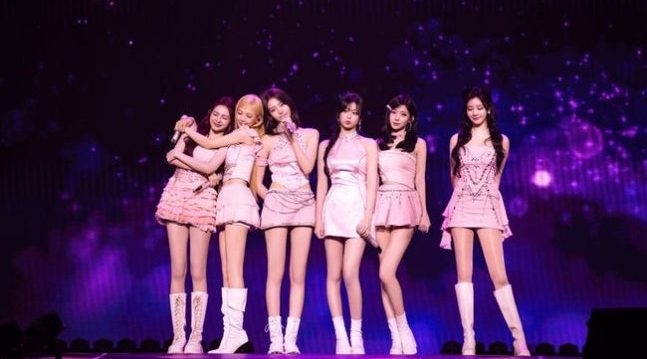
Now, attention is turning toward the future. With TREASURE, which inherited the lineup of the 2020s, and BABYMONSTER, armed with strong live performance skills, carrying on YG’s legacy, YG has signaled yet another expansion.
After reorganizing its internal system last year, YG has been aggressively discovering new talent. In September, it is scheduled to introduce a new five-member boy group, distinct from TREASURE, for the first time in six years. A new four-member girl group, “NEXT MONSTER” (tentative name), which will follow BABYMONSTER, is also set to unveil its final members, including EVELLI, CHANYA, and KAYCI, drawing attention to its next steps.
2026. 7. 9.